ADHD-Friendly Deep Work: Focus Interval Strategies

ADHD-Friendly Deep Work: Focus Interval Strategies
Struggling to focus with ADHD? You’re not alone. Staying productive can feel like a constant battle against distractions, time blindness, and low motivation. But there’s a solution: focus intervals.
Here’s the big idea: Break tasks into short, timed work sessions with regular breaks. This method works for ADHD brains by:
- Creating a sense of urgency with clear time limits.
- Boosting dopamine through small, frequent wins.
- Reducing overwhelm by tackling tasks in smaller steps.
For example:
- Start with 10–15 minute "micro-sprints" if motivation is low.
- Use 25–30 minute sessions for routine tasks.
- Extend to 45–90 minutes for deep-focus work when you’re in the zone.
Tools like Focusmo can help you stick to these intervals by providing timers, blocking distractions, and tracking your progress. It even includes meeting alerts to ensure you don't lose track of time during deep work. The key is experimenting to find what fits your energy levels and adjusting as needed. Focus intervals make deep work possible - even if ADHD makes it harder to stay on track.
10 Hour Pomodoro | 50/10 Intervals | study, work, create 🎨 with BROWN NOISE for ADHD Focus 🎧📚
sbb-itb-8245ce4
Why Focus Intervals Work for ADHD
Focus intervals go beyond being a simple productivity trick - they align with how the ADHD brain functions by offering frequent rewards, creating a sense of urgency, and building in regular breaks. This method turns the often daunting task of deep work into a series of smaller, manageable goals. It directly tackles the challenges associated with ADHD by breaking overwhelming tasks into bite-sized steps.
How Focus Intervals Affect the ADHD Brain
The ADHD brain thrives on novelty and stimulation. George Sachs, PsyD, from the Sachs Center, explains it well:
"The ADHD brain is a novelty-seeker, driven by its unique relationship with dopamine. When a task isn't interesting, urgent, or stimulating, dopamine levels don't rise enough to signal 'Hey, pay attention to this!'"
By dividing work into timed intervals, focus intervals create small, achievable wins that trigger dopamine release. At the same time, the use of a timer transforms vague deadlines into focused, urgent sprints. Julia Fagan from the ATTN Center highlights this:
"The time-bound nature of the technique turns the abstract concept of the future into a concrete event. It flips time on its head, changing it from an abstract source of anxiety to a tangible measure of productivity."
This approach also addresses "time blindness", a common ADHD challenge, by using visual countdowns to make time feel immediate. It minimizes task-switching, a habit that can drain up to 40% of productive time.
Frequent breaks are another key element, helping to ward off mental fatigue, which can lead to errors and reduced work quality. These breaks also prevent hyperfocus from spiraling into exhaustion, creating a balanced system that keeps the ADHD brain engaged and productive.
With this understanding of how focus intervals work, let’s explore the real-world benefits of these short, structured sessions.
Benefits of Short Work Sessions
Short work sessions bring practical advantages that build on the ADHD brain's response to structure. For starters, they reduce the "activation energy" needed to begin a task. Tackling a 25-minute block feels far less intimidating than facing an entire project. This method also helps overcome what some call the "Wall of Awful", which can otherwise stall progress.
Tracking these intervals improves time awareness and planning, effectively countering the planning fallacy - a common tendency to underestimate how long tasks will take.
While stimulant medications are effective for 70–80% of people with ADHD, combining them with behavioral strategies like focus intervals can further boost task completion rates by an extra 40–50%.
Finally, short sessions encourage single-tasking. Knowing a break is just around the corner makes it easier to resist distractions and stay focused on one task at a time. This method turns deep work into an achievable goal, even for those with ADHD.
How to Customize Focus Intervals for ADHD
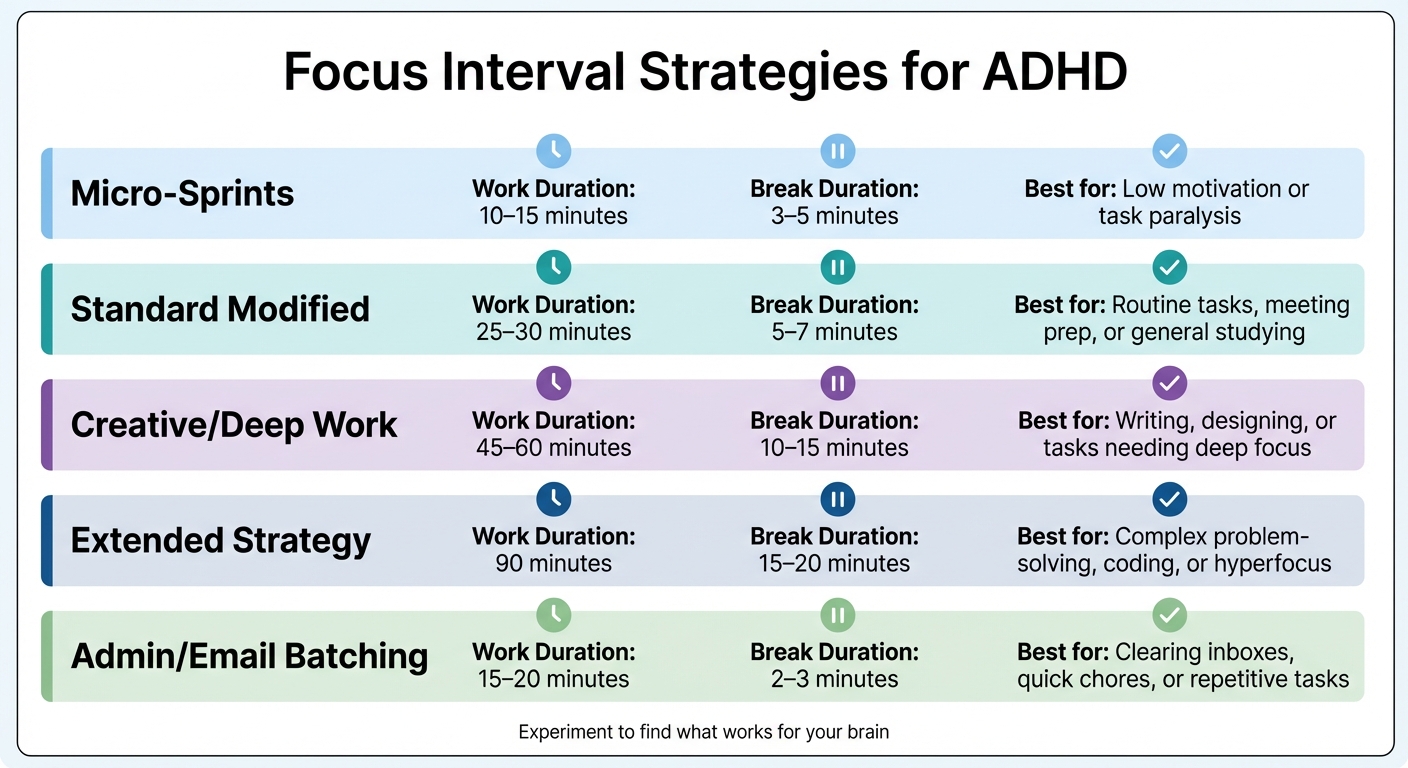
ADHD Focus Interval Types: Duration and Best Use Cases
The traditional 25-minute Pomodoro timer doesn’t work for everyone, especially for those with ADHD. Some might need shorter bursts to tackle task paralysis, while others may thrive with longer sessions when they hit a productive flow. The key is to experiment - find what aligns with your energy levels, medication schedule, and the type of work you’re doing. Then, tweak the Pomodoro method with an all-in-one focus app to fit your personal focus patterns.
Adjusting the Pomodoro Technique
Pay attention to when your focus starts to drift. Kimberly Drake from PsychCentral suggests:
"The trick is identifying when your attention usually starts to wane and setting the timer to stop just before that point."
If 25 minutes feels too long, try starting with 10–15 minute "micro-Pomodoros." These shorter intervals can make starting less intimidating, especially on days when even small tasks feel like a mountain to climb due to executive dysfunction.
On the other hand, if you’re in the zone and the timer goes off, don’t interrupt your flow. Reset it for another 15–25 minutes, and consider adding a quick 2-minute wrap-up at the end to organize your thoughts or save your work.
Other Timing Methods
Tailor your work intervals to fit your energy levels, the type of task, and your medication timing. For tasks that feel overwhelming - like organizing paperwork or drafting emails - shorter sessions of 10–15 minutes can help you ease in without feeling stuck. For creative or deep-focus tasks like writing or coding, longer intervals (45 to 90 minutes) may be better, as they allow your brain to fully engage.
During longer work sessions, set alarms to remind yourself to check your focus and take short breaks. If the Pomodoro method doesn’t quite fit, there are plenty of other timing strategies to explore based on your needs.
Interval Options Comparison
| Interval Type | Work Duration | Break Duration | Best for ADHD Situations |
|---|---|---|---|
| Micro-Sprints | 10–15 minutes | 3–5 minutes | Low motivation or task paralysis |
| Standard Modified | 25–30 minutes | 5–7 minutes | Routine tasks, meeting prep, or general studying |
| Creative/Deep Work | 45–60 minutes | 10–15 minutes | Writing, designing, or tasks needing deep focus |
| Extended Strategy | 90 minutes | 15–20 minutes | Complex problem-solving, coding, or hyperfocus |
| Admin/Email Batching | 15–20 minutes | 2–3 minutes | Clearing inboxes, quick chores, or repetitive tasks |
Don’t forget to plan your breaks as thoughtfully as your work intervals. Create a "break menu" with quick 5-minute activities, like refilling your water, doing a few jumping jacks, or stretching. Use a timer to keep your break from running too long and pulling you off track.
Using Focusmo for Focus Intervals
Focusmo takes your personalized focus interval strategies and turns them into a seamless part of your daily routine. Consistency is often the hardest part of sticking to any productivity plan, but this Mac productivity app, designed with ADHD users in mind, provides tools to help make focus intervals second nature.
Pomodoro Timers and Custom Intervals
With Focusmo, you can set up a Pomodoro timer tailored to your needs, whether you're tackling quick 10-minute tasks or diving into 90-minute deep work sessions. The timer ensures you take regular breaks, keeping burnout at bay and your mind sharp. Plus, your current goal is always in sight, thanks to a small "floating island" on your screen. This feature acts as a quick reminder of what you’re working on, sparing you the hassle of digging through task lists when distractions arise. Need to block out interruptions? With just one click, you can turn any log entry into a distraction-free work block.
Blocking Distractions and Hourly Check-Ins
Did you know that switching to apps like Instagram or Slack can cost you more than 20 minutes of focus? Focusmo helps you stay on track by blocking apps and websites that tend to derail your concentration. To keep you accountable, it also prompts you to log your progress every hour. This regular check-in system acts as a gentle nudge to stay present and productive. As Faye Campbell from motionapp.com shares:
"I've only been using it for a couple of days, but it's just handy to have an accountability buddy to remind me: just do one thing, finish this one thing, do what you said you were going to do."
For those with ADHD who struggle with time blindness, these hourly reminders serve as an external anchor, helping you stay connected to the task at hand.
Tracking Progress and Forming Habits
Focusmo doesn’t just help you stay focused - it also tracks your activity. By monitoring the websites and apps you use during work sessions, the app creates a detailed timeline of your productivity. This data highlights when and where your focus tends to waver, giving you the insights you need to refine your strategies. Will Davidow, a Web Engineer, explains:
"I've only been using Focusmo for about a week, but it's allowed me to organize tasks and manage my time more effectively while also keeping health and mental breaks in mind. The timer and break reminders have been extremely effective."
With tools like these, Focusmo not only helps you maintain focus but also builds habits that support long-term productivity.
Building Long-Term Deep Work Habits
Establishing long-term habits is key to making deep work a consistent part of your routine. Once you’ve nailed down your focus intervals, it’s time to build on them for lasting results.
Starting Small and Building Gradually
Kick things off with short focus sessions - think Mini-Pomodoros of 5–15 minutes or even the Two-Minute Rule. These tiny steps make starting easier and help you ease into the habit.
As you get comfortable, slowly extend your focus time. Try adding five minutes every few days until you find your personal "focus sweet spot." Keep in mind that mastering a timing technique usually takes about 7 to 20 days of steady practice. During the first week, pay attention to when you feel restless or hit a flow state - this can guide you in fine-tuning your intervals.
Reviewing and Tweaking Your Strategy
No system works forever. Most strategies stay effective for about 2–4 weeks before they lose their edge. For those with ADHD or a tendency to seek novelty, this can happen even faster. As the Klarity Editorial Team wisely notes:
"The goal isn't perfection - it's progress and finding tools that support your unique brain."
Set aside time each month to review your progress - the Focusmo activity timeline can be a helpful tool here. Use this review to tweak your interval lengths or adjust your break routines. Regular updates ensure your approach stays aligned with your evolving focus needs. These small changes can keep your deep work habit effective and engaging over the long haul.
Conclusion
Focus intervals can be a game-changer for boosting productivity when living with ADHD. By breaking down overwhelming tasks into smaller, more manageable pieces, they directly address challenges like time blindness, procrastination, and hyperfocus burnout. The secret lies in tailoring the approach to your needs. Whether it's a quick 10-minute sprint on a low-energy day or a focused 90-minute session when you’re in the zone, the goal is to find a rhythm that works for your brain.
Tools like Focusmo make this process even smoother. With features like distraction blockers, hourly check-ins, and progress tracking, the app helps you stay on track without adding unnecessary stress. Plus, its adaptability means you can tweak your strategy as your needs evolve - because what works today might need adjusting tomorrow.
As George Sachs from the Sachs Center explains:
"The goal isn't to force your brain to be 'normal.' It's to learn its unique operating system and use strategies that work with its natural tendencies, not against them".
The journey to building effective habits requires patience and flexibility. Each setback is an opportunity to gain insights and refine your approach. Starting small and adjusting as you go ensures that deep, focused work becomes not just possible but sustainable over time.
FAQs
How do focus intervals help people with ADHD stay productive?
Focus intervals, such as the Pomodoro technique, break tasks into smaller, timed segments with short breaks in between. This method can be especially helpful for individuals with ADHD, as it provides structure and makes staying on task more manageable. By working within these focused intervals, time-blindness is reduced, and the overwhelming nature of larger tasks is minimized. Tackling one clear goal at a time also helps cut down on distractions, making it easier to get started without feeling paralyzed by the workload.
ADHD often comes with challenges in executive functioning, such as difficulty prioritizing, filtering out distractions, or keeping track of progress. Using a timer introduces external structure, turning each interval into a mini-deadline. This approach not only boosts motivation but also helps maintain momentum. The built-in breaks are equally important, as they prevent hyperfocus fatigue, keeping energy levels steady and focus sharp throughout the day.
Tools like Focusmo are designed to make focus intervals easier to implement. With features like Pomodoro timers, hourly check-ins, and distraction-blocking options, these apps provide seamless support. They help users stay accountable, productive, and better equipped to manage ADHD-related challenges.
How can I find the best focus interval for staying productive with ADHD?
The best way to discover your ideal focus interval is through experimentation and observation. Start simple: try a 25-minute work session paired with a 5-minute break. During this time, notice how well you stay focused and how refreshed you feel after each break.
If 25 minutes seems too brief, gradually extend your work time by 5- or 10-minute increments. On the other hand, if it feels overwhelming, shorten the session. You might find that different tasks call for different intervals - creative projects could benefit from longer stretches (like 45 minutes), while repetitive tasks might work better with shorter bursts (around 15 minutes).
Spend a week or two testing and tweaking your intervals. Pay attention to your energy levels and how your focus shifts throughout the day. Once you land on a routine that feels consistently effective, stick with it. Of course, don’t hesitate to make adjustments when your workload or energy shifts.
How does Focusmo help improve focus intervals for individuals with ADHD?
Focusmo offers tools that help manage focus intervals, especially for those navigating ADHD-related challenges. With its Pomodoro-style timers, users can structure their work into clear, timed sessions with defined start and stop points. This approach helps maintain focus, avoid feeling overwhelmed, and ensures regular breaks to recharge and prevent mental exhaustion.
The platform also includes features like distraction blocking, hourly check-ins, and automatic time tracking. These tools help users stay accountable, minimize interruptions, and create an environment that supports consistent focus and productivity, catering to the specific needs of individuals with ADHD.