How Scheduled Check-Ins Improve Accountability

How Scheduled Check-Ins Improve Accountability
Scheduled check-ins are simple yet highly effective for staying on track with your goals. By setting aside regular times to evaluate progress - whether hourly, daily, or weekly - you can build accountability, maintain focus, and address challenges early. This practice is especially helpful for busy professionals or individuals with ADHD who struggle with distractions and time management.
Key Takeaways:
- Boosts Accountability: Regular check-ins create a sense of urgency and help you stay committed to deadlines.
- Improves Focus: They prevent distractions and ensure you're working on what matters most.
- Encourages Consistency: A set schedule removes guesswork and builds productive habits.
- Identifies Problems Early: Frequent reviews help catch issues before they snowball.
- Enhances Goal Alignment: Breaks big goals into smaller, actionable steps.
- Increases Motivation: Real-time feedback and celebrating small wins keep you engaged.
For individuals with ADHD, tools like Focusmo can make check-ins even more effective by addressing challenges like time blindness and impulsivity. Features such as hourly reminders, task visibility, and distraction blockers provide much-needed structure and support.
Start small with a consistent check-in routine, keep it brief, and focus on actionable next steps. Over time, this simple habit can transform how you approach your goals and productivity.
ADHD & Accountability | How to Get Things Done with ADHD
How Scheduled Check-Ins Create Accountability
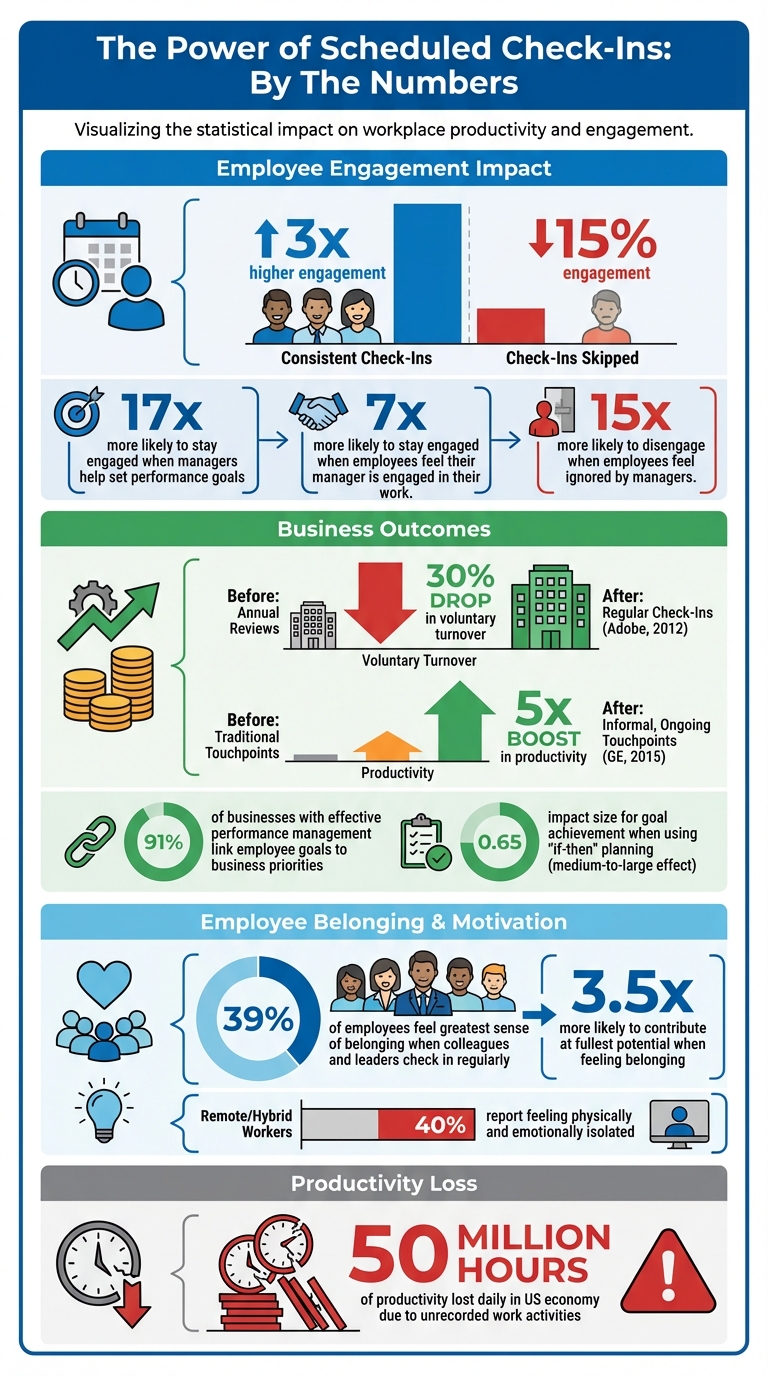
Impact of Scheduled Check-Ins on Employee Engagement and Productivity
Scheduled check-ins act as a built-in system to keep you focused and committed to deadlines. Here's how it works: knowing a check-in is approaching creates a sense of urgency to make progress by a specific time. This sense of accountability taps into your responsibility and helps you stay on track. It's a straightforward but powerful strategy that drives both personal and professional productivity. For example, managers who consistently hold check-ins with their teams see engagement levels nearly triple, compared to only 15% engagement when these meetings are skipped.
Using Routine to Achieve Goals
When it comes to achieving goals, consistency beats intensity. Regularly scheduled check-ins - whether weekly or even hourly - help establish a rhythm that removes the stress of deciding when to evaluate progress. Instead of asking, "When should I check in on this?" the answer is already baked into your routine.
These check-ins also make big goals feel less daunting. Instead of staring down an overwhelming annual objective, you can break it into smaller, actionable steps - quarterly benchmarks or monthly tasks. For instance, scheduling a Monday morning check-in sets the tone for the week, allowing you to tackle challenges early and focus your energy effectively. Research supports this approach, showing that employees are 17 times more likely to stay engaged when their manager helps set performance goals during these sessions. This kind of routine also creates opportunities for timely feedback.
Creating Momentum Through Regular Feedback
Regular feedback, paired with routine check-ins, keeps momentum strong and ensures issues are addressed quickly. Waiting months for feedback can derail progress, but frequent check-ins provide real-time opportunities to course-correct. Companies like Adobe saw a 30% drop in voluntary turnover after replacing annual performance reviews with regular check-ins in 2012. Similarly, GE reported a five-fold productivity boost in 2015 after adopting informal, ongoing touchpoints.
These sessions also allow for celebrating small wins and tackling obstacles early. Research on "if-then" planning shows that creating and adjusting specific plans during check-ins significantly improves goal achievement, with a medium-to-large impact size (0.65). This means you're not just tracking progress - you’re actively fine-tuning your approach as you go. Employees who feel their manager is engaged in their work are seven times more likely to stay engaged themselves.
The most effective check-ins function like coaching sessions, focusing on two key questions: "What are you planning to accomplish this week?" and "What support do you need from me?" This method provides not only practical guidance but also emotional encouragement, which helps you stick to your goals.
Benefits of Scheduled Check-Ins
Scheduled check-ins offer clear advantages over sporadic updates. The secret lies in consistency. When you know a check-in is on the calendar, it changes how you prepare, encourages intentional work, and helps address issues before they escalate.
Identifying Problems Early
Regular check-ins act like an early warning system, catching roadblocks in real time and allowing for quick course corrections. On the other hand, employees who feel ignored by their managers are 15 times more likely to disengage.
These consistent touchpoints also create a safe environment to spot signs of burnout or low morale before they lead to turnover. As Meg Kellogg, Content Marketing Manager at Criteria Corp, points out:
"If coaching is delayed until quarterly or annual reviews, opportunities for growth are lost and challenges compound".
The key is sticking to a regular schedule, keeping meetings short (15–30 minutes), and asking open-ended questions like, "What has been your biggest challenge since we last spoke?"
Better Goal Alignment and Priority Setting
Scheduled check-ins don’t just help identify problems - they also sharpen focus by aligning daily tasks with broader objectives. Without these regular reviews, it’s easy to get bogged down in low-priority work that doesn’t contribute to meaningful progress. In fact, 91% of businesses with effective performance management systems link employee goals directly to business priorities. This alignment helps filter decisions, allowing teams to focus on high-impact work and avoid distractions.
These meetings also reduce the frustration of wasting time on irrelevant tasks and minimize context switching. Kristin Ryba from Quantum Workplace highlights this benefit:
"A check-in meeting helps managers get updates on current projects and challenges, reinforce team objectives, and uncover potential engagement issues as they arise".
By breaking down larger goals into weekly or bi-weekly actions, these sessions help teams maintain momentum without risking burnout.
Higher Motivation and Goal Completion Rates
Regular check-ins create a feedback loop that turns insights into action. This approach helps prevent small setbacks from snowballing into bigger problems and provides opportunities to celebrate progress, which reinforces commitment. The results speak volumes: 39% of employees say they feel the greatest sense of belonging when colleagues and leaders check in with them regularly. Employees who feel this sense of belonging are also 3.5 times more likely to contribute at their fullest potential.
The motivation boost comes from several factors: clear expectations, early problem-solving, and the psychological safety that consistent communication fosters. Meg Kellogg sums it up perfectly:
"Regular feedback fuels action and continuous improvement".
Knowing there’s a set time to review progress also builds accountability, which drives higher goal completion rates. For remote and hybrid workers, this is especially important - 40% of surveyed employees report feeling physically and emotionally isolated from the workplace.
These benefits highlight why scheduled check-ins are a powerful tool for improving team performance and morale.
How to Set Up Scheduled Check-Ins
To run effective check-ins, you need a solid plan and reliable tools. As Harvard Business Review highlights:
"Make a practice of checking in with each of your direct reports on a regular basis, whether it's weekly or once a month, to ask two main questions: What are you going to get done this week (or month)? And what help do you need from me?"
Here’s how you can structure your check-ins for maximum impact:
Step 1: Decide on the Right Frequency
The first step is figuring out how often to hold these check-ins. The frequency should align with your goals' complexity and how you work best. Annual goals often break down effectively into quarterly milestones and monthly tasks. For more intricate or time-sensitive projects, weekly check-ins can help you spot issues early. If you're managing daily tasks, shorter intervals like hourly check-ins paired with the Pomodoro Method (25-minute focus blocks) can keep you on track, especially if you struggle with focus or have ADHD.
No matter the frequency, consistency is key. Weekly check-ins are great for staying connected to daily progress and making timely adjustments. On the other hand, bi-weekly or monthly sessions might work better for workflows that don’t change as often. As mental health advocate Leanna Lee emphasizes:
"For an annual plan to be successful, you need some good check-ins along the way to keep you - and your goals - on track".
Step 2: Set a Clear Agenda
A well-structured agenda is the backbone of a productive check-in. Focus on three main areas: reviewing progress since the last session, identifying current challenges (like missing resources or technical issues), and setting goals for the next period . Jelena Relić from Thrivea suggests shifting the conversation’s focus:
"The focus should shift from 'What did you finish?' to 'What did you learn, and what's next?'".
Skip vague questions like "How's it going?" and instead ask targeted ones such as "What could go wrong?" or "What are you most proud of recently?" Keep meetings concise - 15 to 20 minutes is usually enough - and document key takeaways immediately. As Relić warns:
"If you don't take notes or record outcomes, the meeting disappears the moment it ends".
End every check-in with clear next steps, assigning responsibilities and setting deadlines.
Step 3: Leverage Productivity Tools
Once your agenda is set, use productivity tools to streamline the process. Apps that integrate with platforms like Google Calendar or Outlook can turn scheduled check-ins into actionable tasks with just a click. Automated reminders can help you stick to your schedule. Mercedes Soria, EVP and Chief Intelligence Officer at Knightscope, shares:
"By setting priorities and creating a schedule for the week ahead, I've found that I am using my time more effectively and efficiently. This helps me to avoid getting bogged down in low-priority tasks or distractions".
Look for tools with features like visual dashboards, built-in Pomodoro timers, and distraction blockers. Considering that unrecorded work activities cost the US economy about 50 million hours of productivity daily, automating your check-ins isn’t just helpful - it’s essential for staying accountable and efficient.
sbb-itb-8245ce4
Using Focusmo for ADHD-Friendly Check-Ins
Most traditional productivity tools don’t account for the unique challenges faced by individuals with ADHD, such as time blindness, executive function struggles, and hyperfocus. That’s where Focusmo (https://focusmo.app) steps in. It’s specifically designed to address these hurdles by externalizing time, easing mental effort, and offering structured support to help ADHD users stay on track. Through its tailored features, Focusmo makes scheduled check-ins more effective by directly tackling ADHD-specific obstacles.
Hourly Check-Ins and Task Visibility
For those with ADHD, "time blindness" - the difficulty in gauging how much time has passed - can be a constant struggle. Focusmo combats this with hourly alerts, providing audible cues that research has shown to be effective in supporting self-monitoring for ADHD users.
Another standout feature is Focusmo’s floating task island, which keeps your top-priority task front and center. This eliminates the overwhelming sense of "task paralysis." As the ADDA Editorial Team aptly puts it:
"Trying to focus with ADHD can feel like you're watching TV with a broken remote control. The channels keep flipping at random!"
By visually externalizing your current priority, Focusmo reduces the mental effort needed to remember what’s most important. This visual reminder also fosters a sense of urgency, while automated time tracking seamlessly integrates into your workflow, further lightening the mental load.
Automatic Time Tracking and Activity Insights
Manual time tracking can be a nightmare for ADHD users - it demands constant focus and effort. Focusmo simplifies this process with automatic time tracking, which works quietly in the background. Every minute is logged without requiring any extra attention, solving a common productivity issue.
The app also provides clear activity insights, giving users a detailed breakdown of how their time is spent. As one user insightfully noted:
"Being presented with how we spend our time in black and white makes it impossible to ignore the minutes we waste on unproductive activities"
For ADHD users, this kind of data is a game-changer. It highlights patterns and reveals opportunities to address recurring distractions. But Focusmo doesn’t stop at tracking - it actively helps users maintain focus.
Distraction Blocking and Custom Notifications
Impulsive browsing and other distractions can derail even the best intentions, especially for ADHD users seeking dopamine-driven stimulation. Focusmo’s distraction blockers step in to curb these impulses. With custom notifications and website blockers, the app minimizes online distractions and encourages immediate refocusing.
These alerts also prompt timely self-reflection, helping users catch themselves before slipping into hyperfocus on low-priority tasks. Additional features, like meeting reminders and task reset options, provide the structure and accountability needed to stay productive throughout the day. Together, these tools create a supportive environment tailored to the unique needs of ADHD brains.
Common Problems and How to Fix Them
Scheduled check-ins are great for building accountability, but they can lose their effectiveness if common issues aren’t addressed. Recognizing these challenges - and knowing how to resolve them - can make the difference between a system that works and one that falls apart.
Inconsistent Scheduling
One of the biggest obstacles to effective check-ins is inconsistency. Without a fixed schedule, procrastination can easily creep in. This is especially problematic for individuals with ADHD, where "time blindness" - the difficulty in keeping track of time without external reminders - makes sticking to a routine even harder.
The solution? Commit to a regular schedule. Treat your check-ins as non-negotiable appointments. Set a specific time and stick to it. Tools like Focusmo can help by sending hourly prompts like “What are you doing?” or “What’s next?” to keep you on track. Also, consider adding short 10–15 minute buffers between tasks to prevent a single delay from throwing off your entire day. These strategies help maintain consistency and keep your accountability system running smoothly.
Once scheduling is consistent, the next step is to refine the agenda for these sessions.
Unclear or Overwhelming Agendas
Trying to tackle too much in one check-in can leave you feeling overwhelmed and unproductive. In fact, only 38% of a productivity-focused audience said they regularly completed a weekly review, with many citing the overwhelming nature of the process as the primary reason. Tiago Forte, founder of Forte Labs, explains:
"Your Weekly Review should be a quick check-in to give you clarity for the coming week... If you are trying to completely overhaul your life goals every week, that is a recipe for chaos, not clarity".
To make your check-ins more effective, keep the agenda simple. Share major priorities - your “big rocks” - in advance so the actual session can focus on decisions and problem-solving. For tasks that feel overwhelming, try the "Getting Started" method: break them into 2–4 small, actionable steps like “Open the document” or “Write one sentence”. Simplifying the agenda ensures that each session stays focused and actionable.
The final piece of the puzzle is making sure outcomes are tracked and followed up on.
Not Following Up on Outcomes
The real value of check-ins lies in tracking progress. Without documenting outcomes and reviewing them before the next session, it’s nearly impossible to measure improvement.
To address this, take a few minutes to review your notes before each check-in. Tools like Focusmo can simplify this by automatically logging your activities and providing a clear timeline of your day’s work. At the end of every check-in, set specific, measurable next steps - like “I’ll review these flashcards by Friday.” This practice keeps your goals clear and ensures accountability, turning your check-ins into a powerful tool for progress.
Conclusion
Scheduled check-ins offer a clear framework for feedback, support, and continuous learning on the job. Research highlights that this kind of consistent interaction is one of the most effective ways people grow professionally. Regular meetings help keep projects on track and allow for timely adjustments when needed.
To make these check-ins effective, stick to a fixed schedule, keep the agenda straightforward, and always wrap up with specific, actionable next steps. This level of consistency ensures that check-ins happen regularly and stay focused on what truly matters. Whether you’re meeting daily, weekly, or monthly, the goal is to stay accountable and aligned with your objectives. This kind of structured approach is especially helpful in tackling time management challenges.
For individuals who find time management particularly difficult - such as those with ADHD - tools like Focusmo can make a big difference. Features like automatic hourly prompts, task tracking, and real-time visibility of goals act as an accountability partner. The floating island feature, which keeps your current goal front and center, helps minimize distractions.
As John Di Lemme wisely put it, "Accountability separates the wishers in life from the action-takers that care enough about their future to account for their daily actions". This quote underscores how accountability can turn aspirations into tangible results.
Start small with a manageable check-in schedule and a focused agenda. Consistent follow-through will amplify your progress, and the results will speak for themselves.
Want to make check-ins a seamless habit? Try Focusmo free for 7 days and see how a structured approach to accountability can transform your workflow.
FAQs
How do scheduled check-ins help people with ADHD manage their time better?
Scheduled check-ins can be a game-changer for individuals with ADHD, offering a practical way to manage time by breaking tasks into smaller, more achievable steps. They also act as external prompts, helping combat "time blindness" by providing clear, visible signals that make progress easier to see and measure.
Tools like visual timers or apps with hourly reminders can be incredibly helpful for this process. These tools prompt you to pause, take stock of your progress, and make adjustments as needed. During each check-in, you can quickly review what you've achieved, tweak your plan if necessary, and jot down notes to refine your approach for the future. This routine not only builds accountability but also reduces the risk of feeling overwhelmed, paving the way for a more balanced and productive day.
What are the steps to create an effective check-in routine?
To establish a check-in routine that gets results, start by picking a consistent day and time - say, every Monday at 9:00 AM. Make sure you’re clear on the purpose of these sessions, whether it’s to monitor progress, tackle obstacles, or assess priorities. Break down larger goals into smaller, manageable steps so you can track progress more effectively. Take some time beforehand to review recent wins and identify areas that need improvement.
Consider using tools like Focusmo to set reminders, track progress, and keep everything organized without adding extra hassle. Wrap up each check-in by outlining specific action items, setting deadlines, and assigning responsibility to ensure things get done. Periodically reassess your routine to ensure it stays in sync with your goals as they evolve. This kind of structure keeps you on track and moving steadily toward success.
How can scheduled check-ins help me stay on track with my goals?
Scheduled check-ins are an effective way to stay on track and maintain accountability. Setting aside regular times to assess your progress helps break down big-picture goals into manageable steps, ensuring steady forward momentum.
These moments of reflection let you evaluate how far you've come, shift priorities as needed, and acknowledge small victories along the way. They also create a feedback loop that keeps your motivation high and your objectives in focus. Keeping a record of your progress - whether in a journal or using a tool like Focusmo - can make it easier to see your growth and stay committed over time.
By weaving short, consistent check-ins into your routine, you can stay focused on your goals, make thoughtful adjustments, and keep the drive needed to achieve lasting success.